Firstly, apologies for such a long post. I usually get the most things done on the first day, and gradually slow down as the subsequent days pass. (well, I couldn’t help it; planning freak)
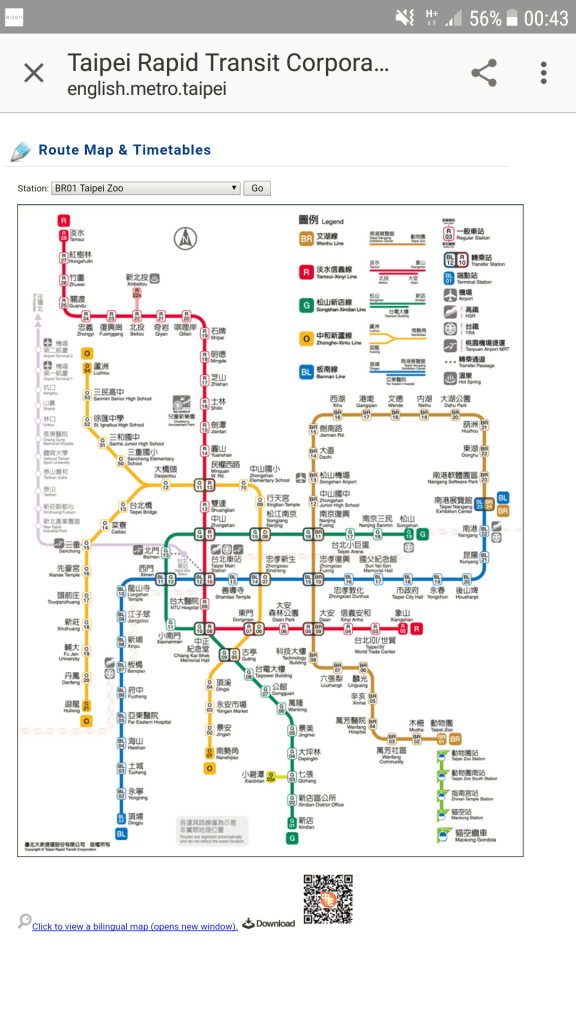
I touched down at Taoyuan Airport at around 7am, and as expected, the airport wasn’t crowded at that time of the day. I luxuriated in the ease in which I cleared customs and made my way to the smacking new MRT station which linked the airport to the city area. Back in February when the whole Fat Furious gang was here, it wasn’t up yet and we had to rent a vehicle to take us to Ximending (henceforth abbreviated as XMD).
The station and MRT smelt and looked smacking new and even in the morning, a healthy crowd got into the train with me. I cannot stop crowing about how clean and nice the train was – from the seats to the way they stashed the luggage.
Then by 9am, and at long last, I was in XMD square once again. It felt like I was coming home to a happy place, and all the roads, the sights and the buildings were exactly the same as we left them in February.
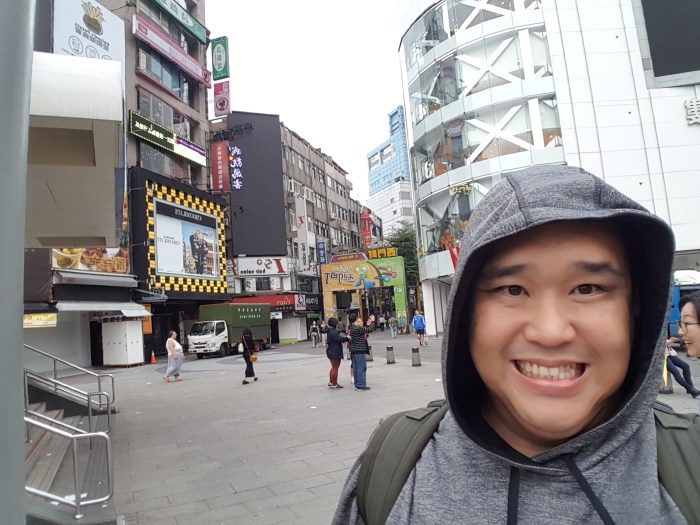
The same littered street with those small puddle holes greeted me as I made my way into that small lane towards Good9stay Inn – the pre-eminent budget hotel in the heart of XMD. I was both elated and excited by this time, although slightly disappointed that it wasn’t as chilly as expected, and it was actually hot.
The Good9stay attendant informed me that the room would only be ready by 1pm, and so I had no choice but to start invading Taipei without checking in yet. No matter, I had information to check, and so I left my luggage with the counter and went forth with my trusty MRT card.
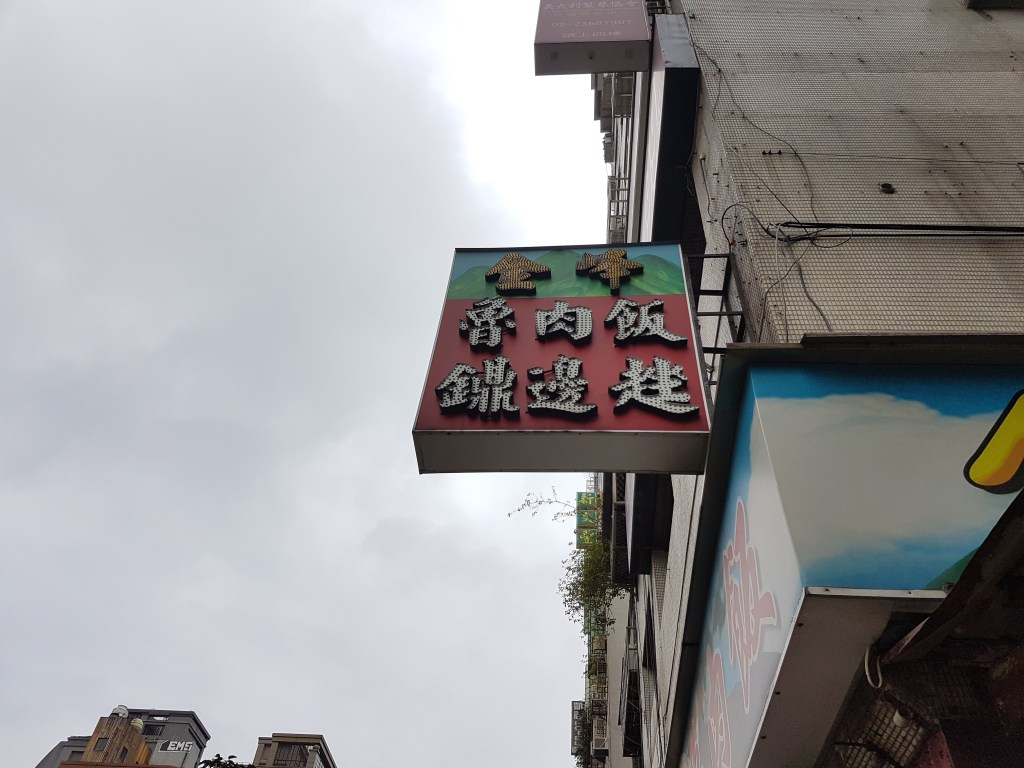
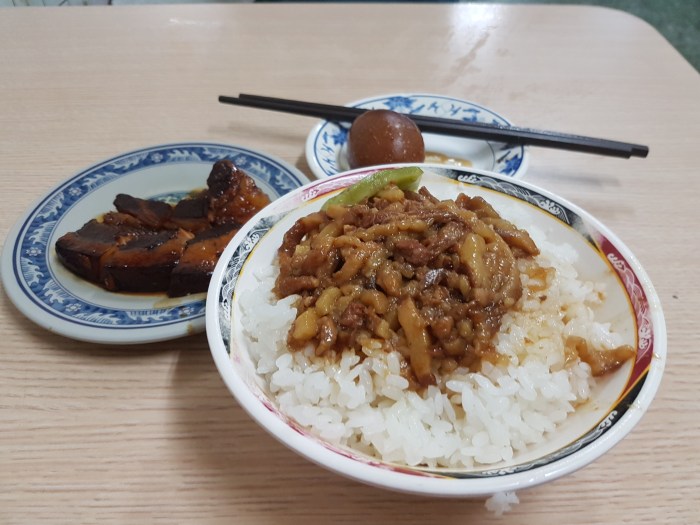
First and foremost, I went hunting for a well-known “Lu Rou Fan” (Braised Pork Rice) stall recommended to us in the last trip to tick that box. The food here was divine and it was a great kick-off to my Taipei vacation.
I headed via train towards the main train terminus to check on timings because I was eyeing a trip to Taroko Gorge, which was one of place the we didn’t manage to check out before. To make a long story short, I decided, after checking the logistics required to travel there and the timing of the trains, that it was better to go there next time with a group. Going there alone did not seem worth it.
OK having ticked that off, my next mission was to check out as many temples within Taipei City I possibly could in a small period of time because I missed out of many of them in the last trip. (My fat furious group consisted of people mostly indifferent to history, religion and architecture)
Before the trip, I had already plotted a viable course via bus and train to visit not one, but 4 temples in one morning. Granted, I spent less than an hour in most of them, I took as many pics as I needed to, and appreciated them as much as I could before rushing to the next one.
Wen Chang Temple
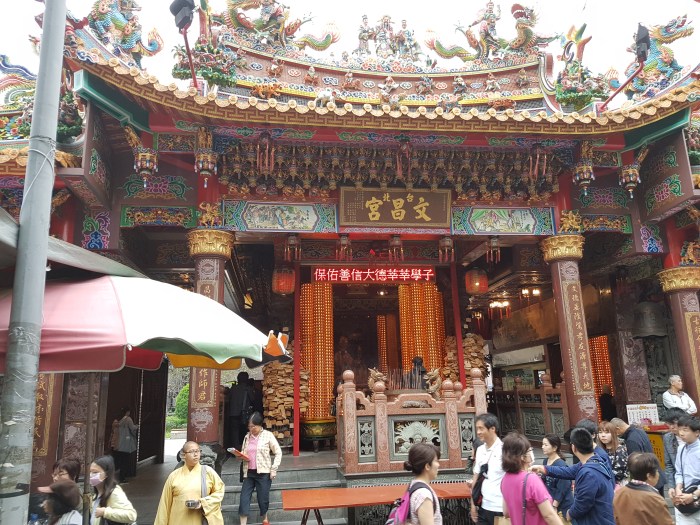
There are a few of these around Taiwan, and the one that I visited was the one along Dihua Street.
Wenchang Dijun – the God of Literature was worshiped by the people of Dalongdong (from one of the first villages in the Taipei region circa 1853) during the Qing Period at Bao’an Temple. The temple was a famed place of learning and was where the “Shuren” (Scholars) Academy was established. Through the years; surviving even the Japanese Occupation, The Academy and temple served an important cultural and educational role in society and was the site of annual ceremonies awarding scholarships for public schools.
The separate Academy which I visited was later built at Wenchang Temple on Dihua Street Section 2 in Taipei City.
During the school examination period, students flock to the temple to make offerings of foods with symbolic meaning, such as tangerines (good luck), scallions (intelligence and skill), kumquats (examination success), turnips (good fortune), and sweet Osmanthus leaves (assistance from persons of noble standing).
Wenchang Temple also occupies an important place in the history of Dalongdong as the origin of the local public school system and a memorial to the educational spirit of the early residents of this area.
Confucious Temple
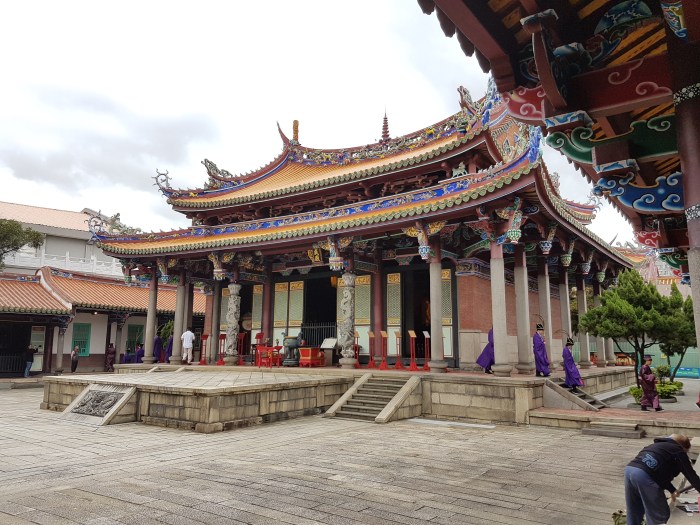
The Confucius Temple ( 臺北孔子廟) along with neighboring Bao’an Temple (保安宮) are part of the Dalongdong Cultural and Historical District (大龍峒).
Built in 1879 during the Qing era, after Taipeh Prefecture was established in 1875. During the Japanese era, the temple was demolished during the Japanese era, but was rebuilt in 1930 by Wang Yi-Shun.
Located on Dalong Street, Datong District, the temple is modeled after the original Confucius Temple in Qufu, Shandong Province of China. It is, among the Confucius temples in Taiwan, the only one adorned with southern Fujian-style ceramic adornments.
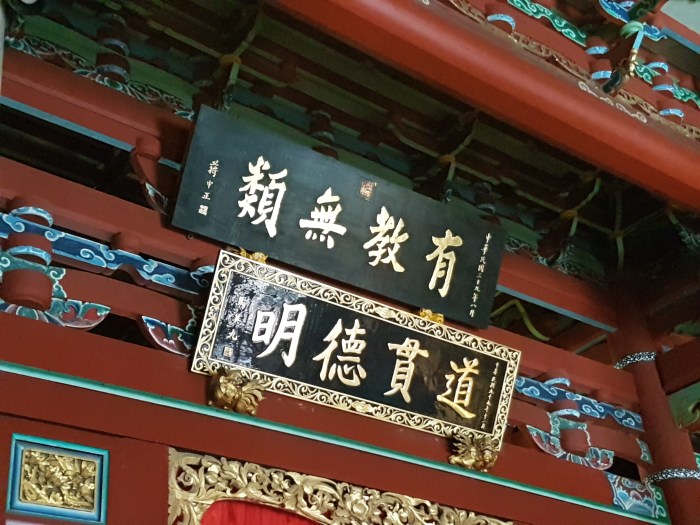
At the main hall of the temple one can see a black plaque with gold lettering which was inscribed by Chiang Kai-shek that reads “Educate without Discrimination.” Every year on September 28, a ceremony with traditional music and stylized dancing is held at the temple in honor of Confucius.
After entering the Li Gate, you will see the Wall of Supreme Knowledge (Wanren Gongqian) and the Pan Pond. The wall formerly represented the desire to learn and the hardship of study but has now lost this meaning; the bridge over Pan Pond is decorated with sculptures in the shape of brushheads. Formerly, only those who had passed the imperial exams could cross the bridge when making a sacrifice, and pass through Lingxing Gate. The Lingxing Gate is as wide as seven rooms, and its peak is a hip-and-gable roof. 108 nails protrude from the door, symbolizing the 108 constellations, which refers to protecting the temple from monsters and demons.
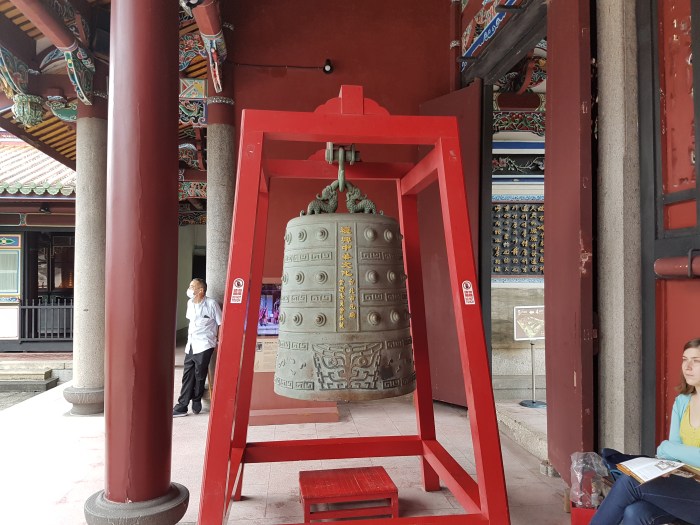
The Yong bell, a large bell, and the Jin drum, a large drum, are placed on either side of Yi Gate. They have the auspicious meaning of the sounding of drums and bells.
The Dongwu (east side-buildings), Hongsheng Shrine, and Xiwu (west side-buildings) house memorial tablets dedicated to Confucius and the Confucian Saints, and contain many interactive multimedia installations which introduce the life of Confucius and the Six Arts (Liuyi) of the Rites, Music, Archery, Charioteering, Calligraphy, and Mathematics, (which emphasized a broad and balanced education in those times). Many of the educational displays look interactive and fun for inquisitive children.
Also recommended are the free Confucius-themed shows in the 4D cinema. Nine screenings (first one at 10am, last at 4pm) are held throughout the day.
I was also privy to a very special Yi Dance – dedicated to Confucious and it was really the highlight of my morning. I found a video clip similar to what I saw here. Enjoy!
The temple is truly a key cultural point (even on a weekday morning), attracting many foreign tourists and locals alike who revere or are curious about the spirit of Confucious and the temple’s architecture.
Dalongdong Bao’an Temple
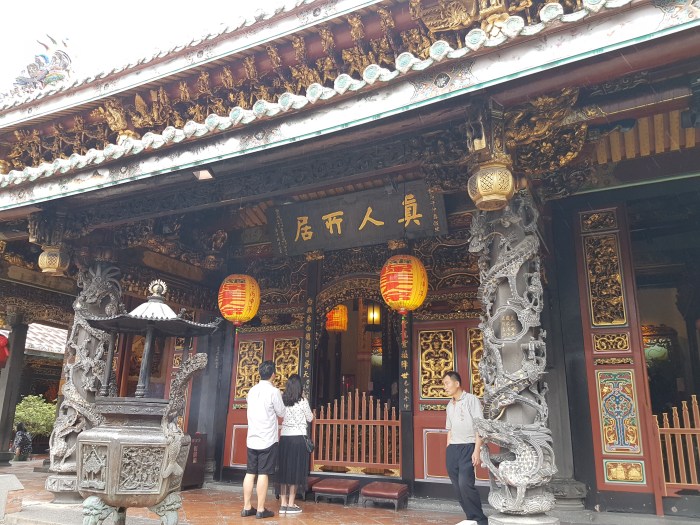
The Bao’an Temple was constructed in 1742 as a wooden shrine and was renovated and reconstructed several times and was finally inducted into UNESCO for cultural heritage conservation.
The temple is dedicated to the Taoist Saint Baosheng Dadi (保生大帝) and was built in line with Feng Shui practices. It faces south and the collective halls and houses run from tallest to shortest from east to west in observation of Confucian principles. The temple also houses a drum tower.
Large images of gods protect the gates nearby the doors of the temple and large coloured murals are displayed throughout the grounds.
Bao’an Temple is especially well-known for the Baosheng Cultural Festival (held on the 14th day of the 3rd moon as that is the eve of the Baosheng Emperor’s birthday), where participants and locals march in a parade to worship agricultural gods and perform cultural activities such as the renowned fire-walking ritual. At Bao’an Temple, festivities continue with lion dance shows,Taiwanese traditional folk opera, puppet shows, and ancient Chinese wind instrument performances.
Xingtian temple

Xing Tian Temple (行天宮) is arguably one of the most popular temples in Taipei City. It is a Taoist temple dedicated to Guan Yu (關羽), a well-known red-face general in the famous China Three Kingdoms Period (184~280). Sculptures of dragons feature prominently in this temple’s design
While 2 other Xing Tian Temples exist in Taipei; the Beitou branch being the oldest one, and the branch in Sanxia is called Xing Xiu Temple (行修宮). Xing Tian Temple, constructed in 1967, is the youngest one and has become the most visited one due to its convenient location next to MRT Xing Tian Temple Station in Taipei City.
Guan Yu is worshiped as the god of war or martial god and is also popular among businessmen. You can tell fro the throngs of people queuing to pay homage to the deity. Blue-robed officials assist the public in all temple affairs and I spent a lot less time than I would preferred to have due to the rising heat the bustle of the crowds within the temple.
However, this temple is by far the most awesome looking one.
The next destination was Maji Square.
Maji square
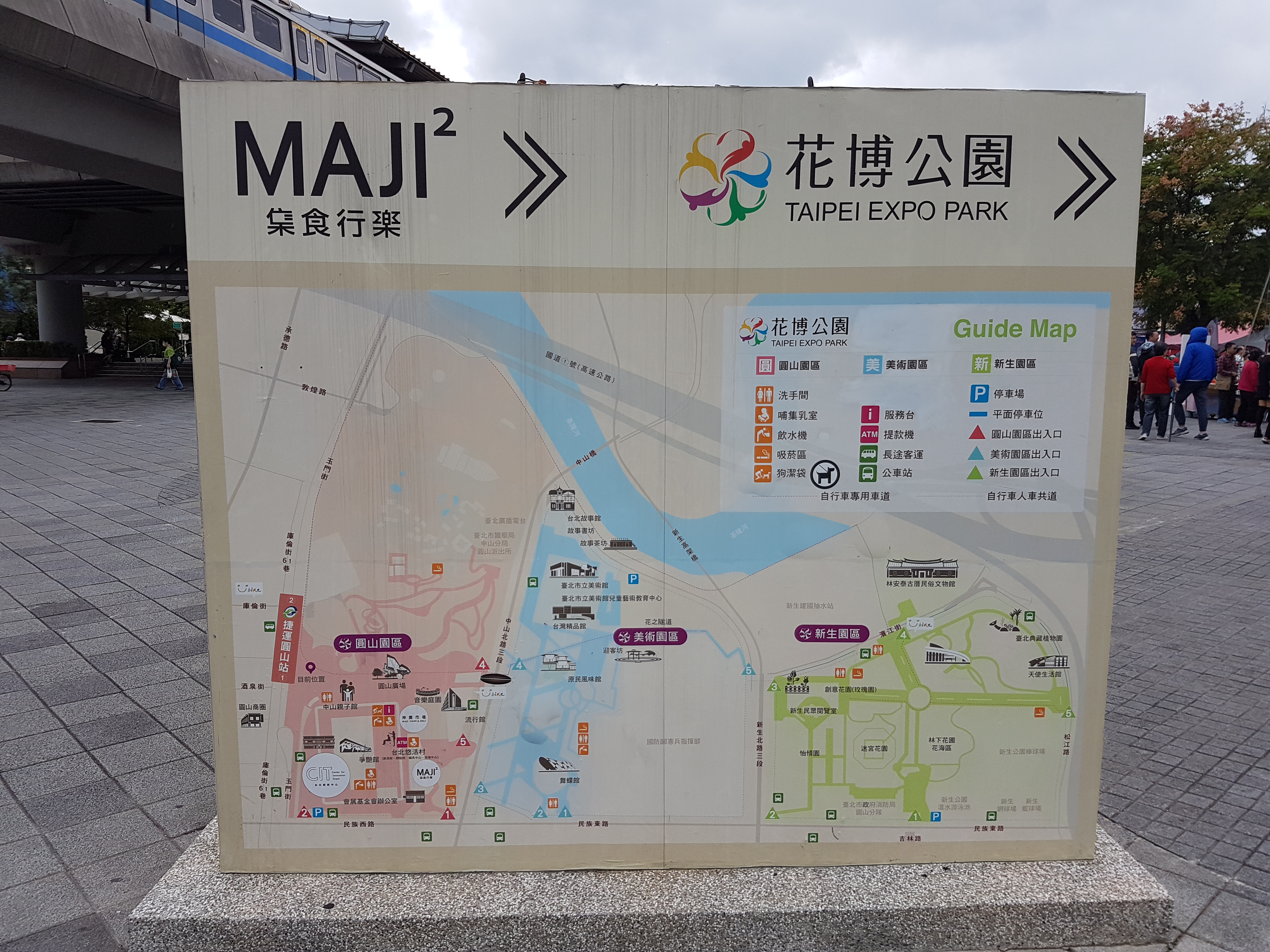
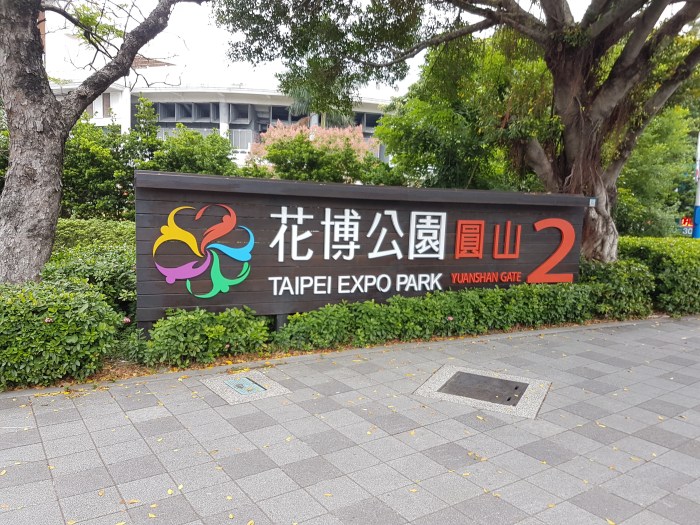
Maji Maji, (aka Maji Square) is an immensely fun and interactive space and is situated near the Taipei Fine Arts Museum and is nestled in the Taipei Expo Park’s Yuanshan Park Area. Meticulously planned by popular Taiwanese recording artist, Harlem Yu, and well-known Taiwanese designer, Eugene Yeh, cargo containers and wooden barns are incorporated with the site’s natural setting, with diverse elements of gastronomy, creative goods, music, and art ingeniously brought together.
It is a really good list of venues for a full day of activity, including sprawling lawns surrounding the market – perfect for a picnic with the kids and trays of eats from the Maji Maji market.
It is, in other words, a huge expo slash community compound.
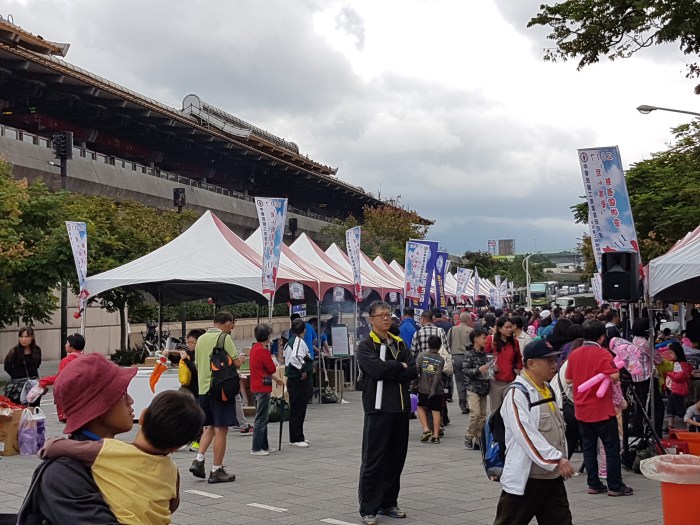
You have a Farmer’s Market Expo going full swing outside the compound, under tentage at Maji Square’s entrance. The stalls sell organic, locally sourced foods – ripened to perfection. Seasonal fruits, free range eggs and homemade yoghurts. At such an early hour, drink stalls, the usual food stalls, and the festive atmosphere was already in the air.
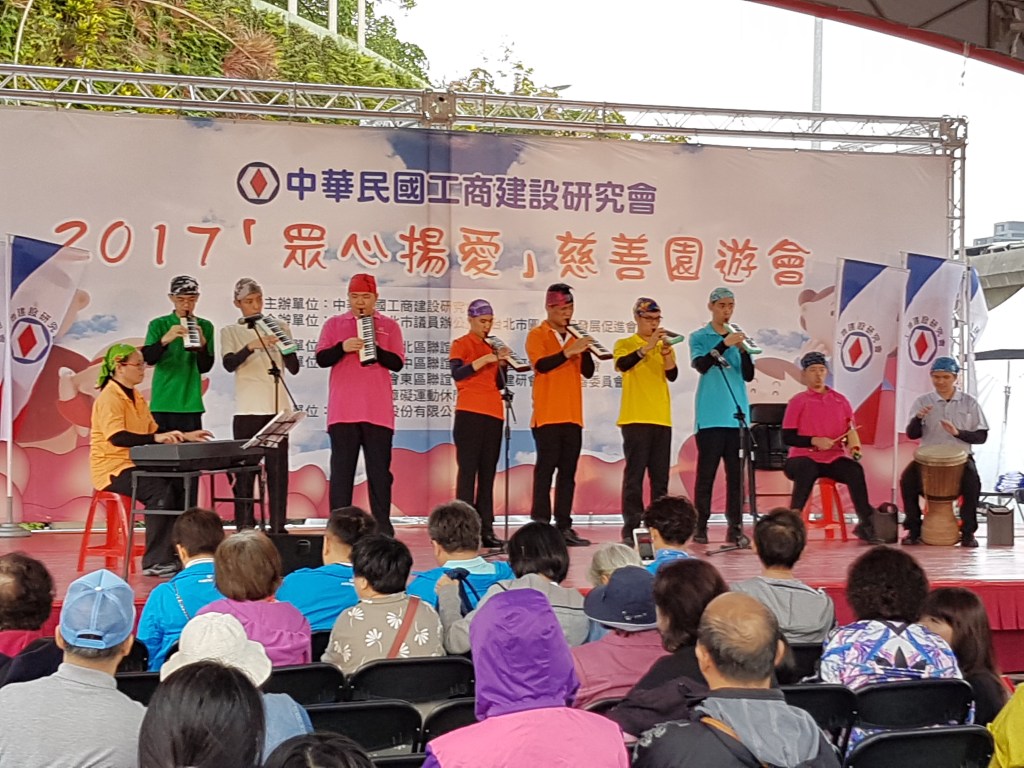
Within the compound, there were disparate squads of teenage dance crews rehearsing their choreography. (I learnt later that this was a popular place for students to hang out and practice for performances and competitions and stuff). Baby sitters and young, hot mommas chase their toddlers as they go fast and furious in their electrical cars around the huge space within the compound.
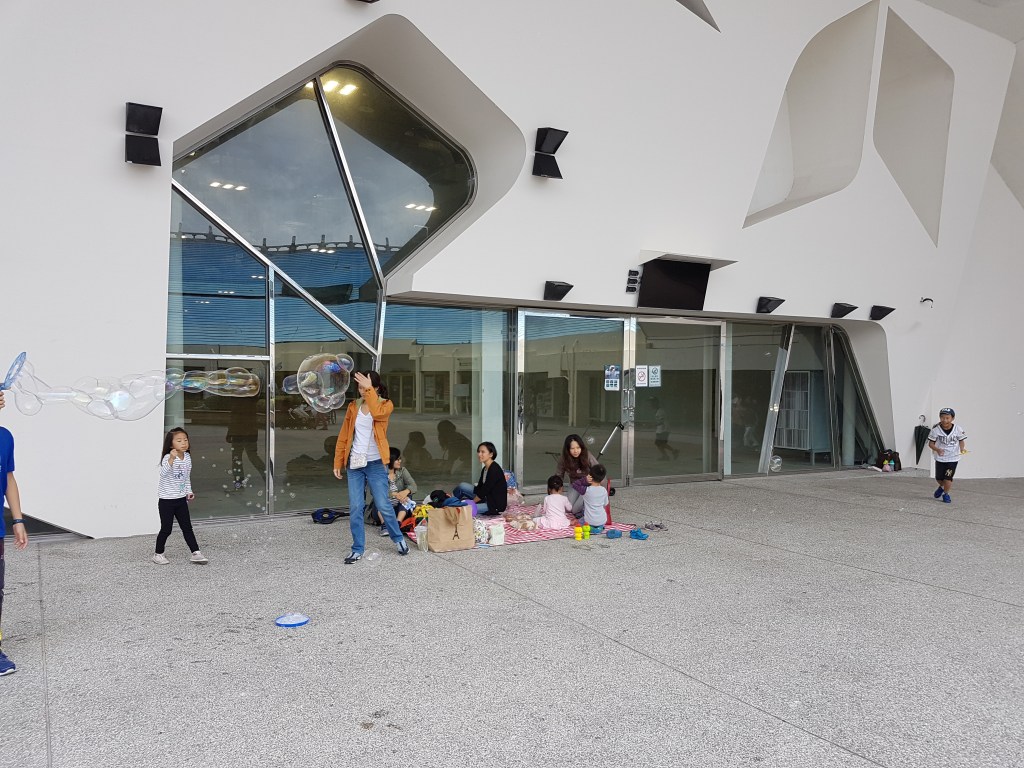
Food vendors in the Maji Maji market eating area offer cuisine from every corner of the continent. A great place for laid-back drinks, quick bites and shopping for one-of-a-kind clothing or decor items. The restaurants and cafes ranging in various themes from Mediterranean to American prepare to open for business before the 12 noon hour. It looked like this place would be happening at night as well. It is advertised to be a wonderland of gourmet food and retro lifestyle products, bristling with life as the music of live performers whirls along the market passageways.
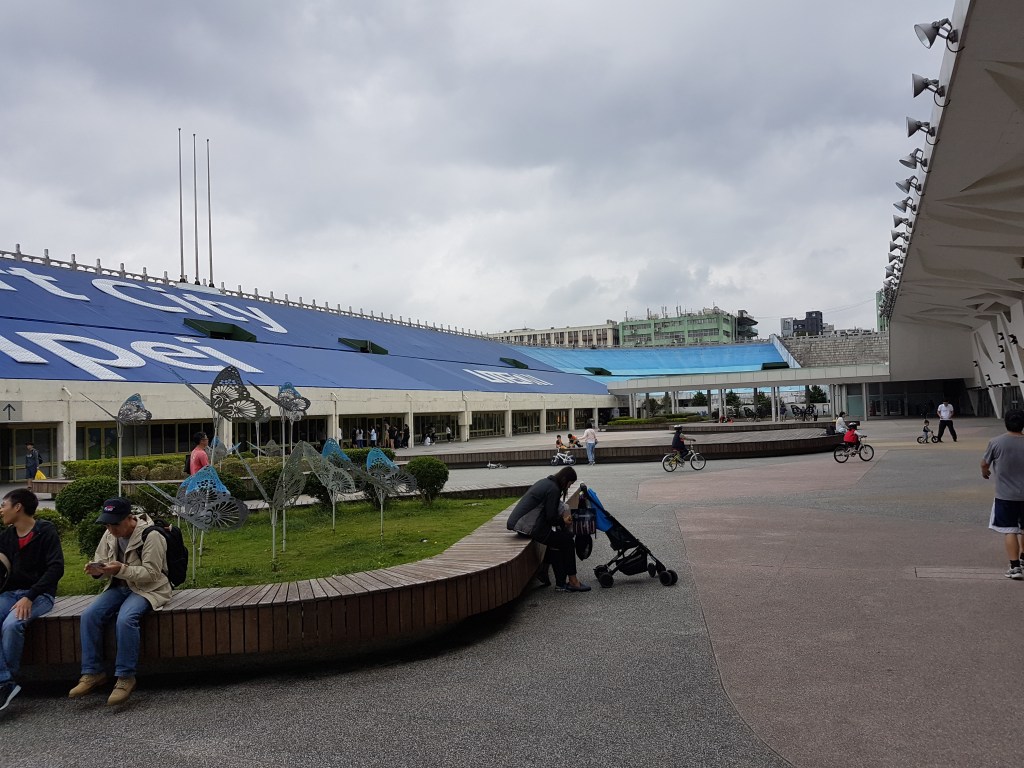
Maji square was a vast complex of exhibition halls which looks to have evolved into a family/community destination. I was astounded by how many things were happening here.
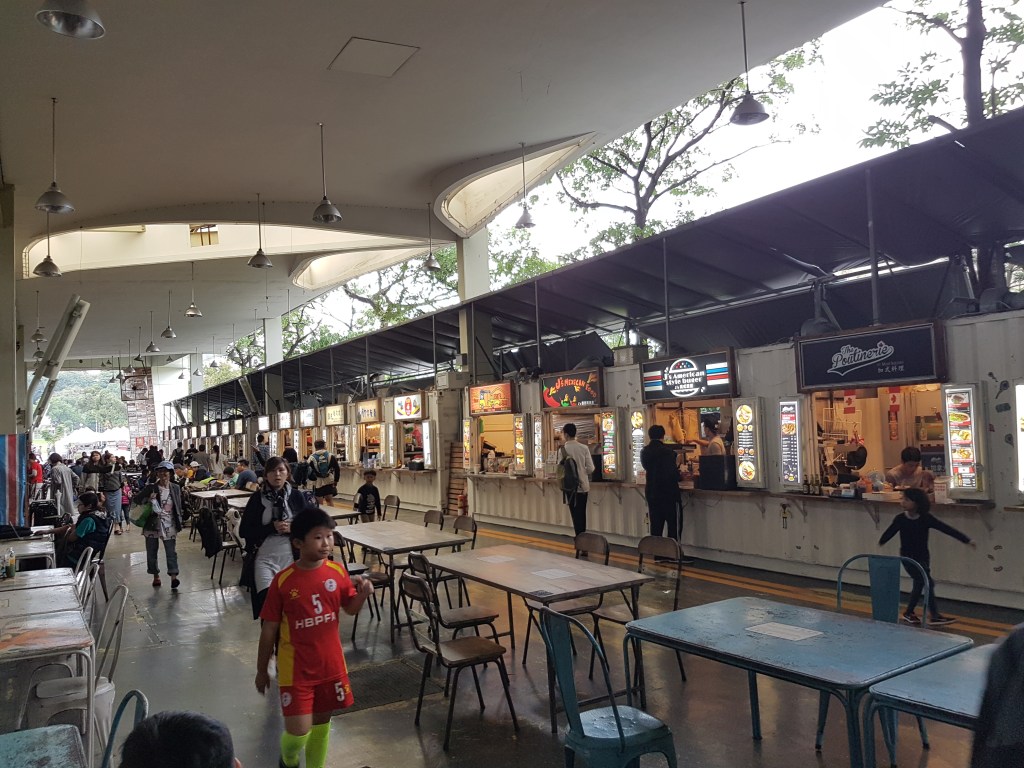
And all this while, huge 747s and military-like planes roared across the sky overhead, drowning out all sounds at least once every 10-15 mins.
I peered into some of the exhibition rooms and some of them were converted into those workshop spaces they rent/lease/lend out to hobby craftsman to do carpentry, metalwork and such. These chambers contained well equipped work-benches and machines which would make any DIY enthusiast stay here for a whole day.
It was an amazing place to observe Taiwanese families and students going about their communal activities, and it gave me a rare insight on what it would be like to live here. It was not unalike Singapore, but more.. cheerful
My primary objective finally opened for business but to my dismay, all tables had been reserved beforehand. The Bricksworld Cafe (the objective) at Maji Square was something I wanted to check out because it was a concept that had (at the time of this blog) yet to make it to Singapore. It was simply put, a cafe and a Lego store rolled into one.
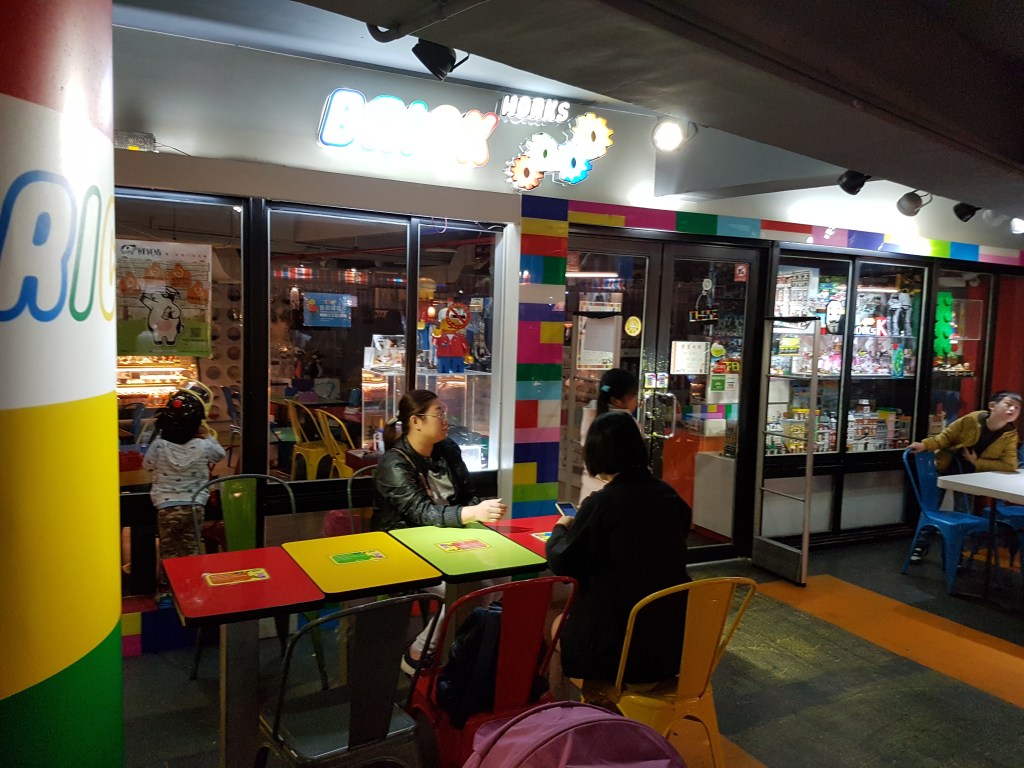
I was reduced to just browsing around, snapping pictures and so I did not spend much time hanging around the cafe, but more time wandering around before leaving for my next destination.
A few bus rides and some google navigation later, I finally found the Tutti Cafe Paw hotel.
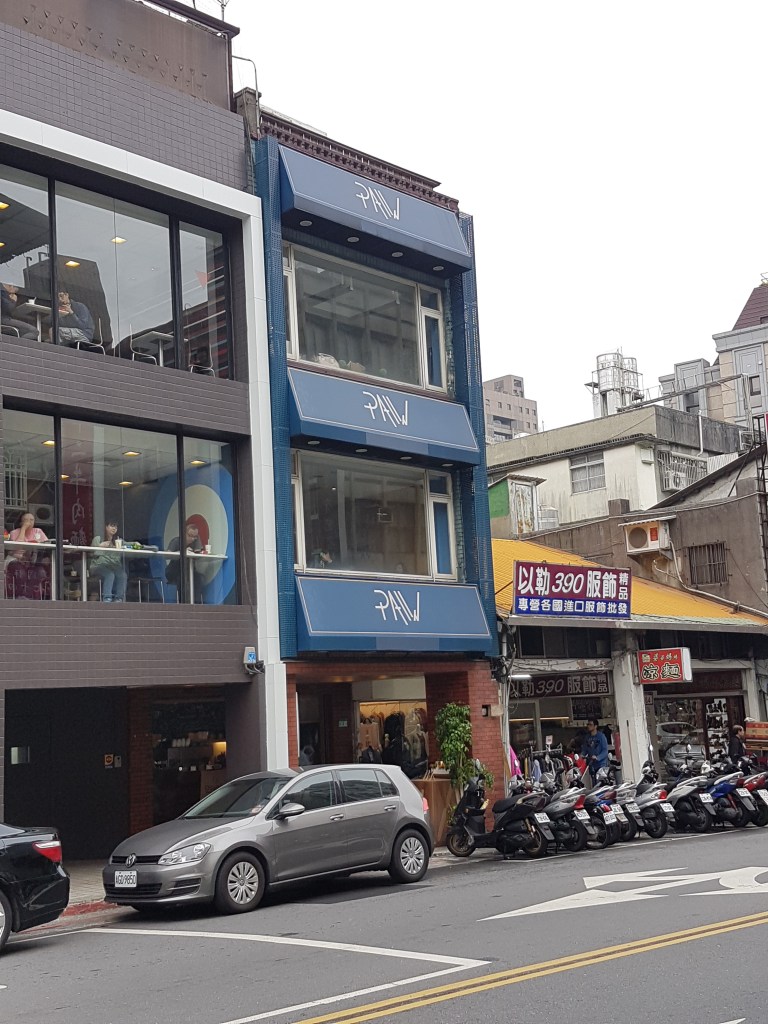
Located in the Zhongxiao Xinsheng area, this special pet cafe not only offers eat-and-drink-ables for both humans and dogs. It is a place for both humans and dogs to mingle and socialize with other humans and dogs. In case the humans need to do other stuff somewhere else after the meal, the Paw Hotel (as its name literally means) also provides boarding to temporarily take care of your pet-friend!
For people like me who did not turn up with a pet, I could also mingle around with Tutti (Tutti Cafe’s mascot Corgi, aka “the assistant manager”) while my meal or drink was served.
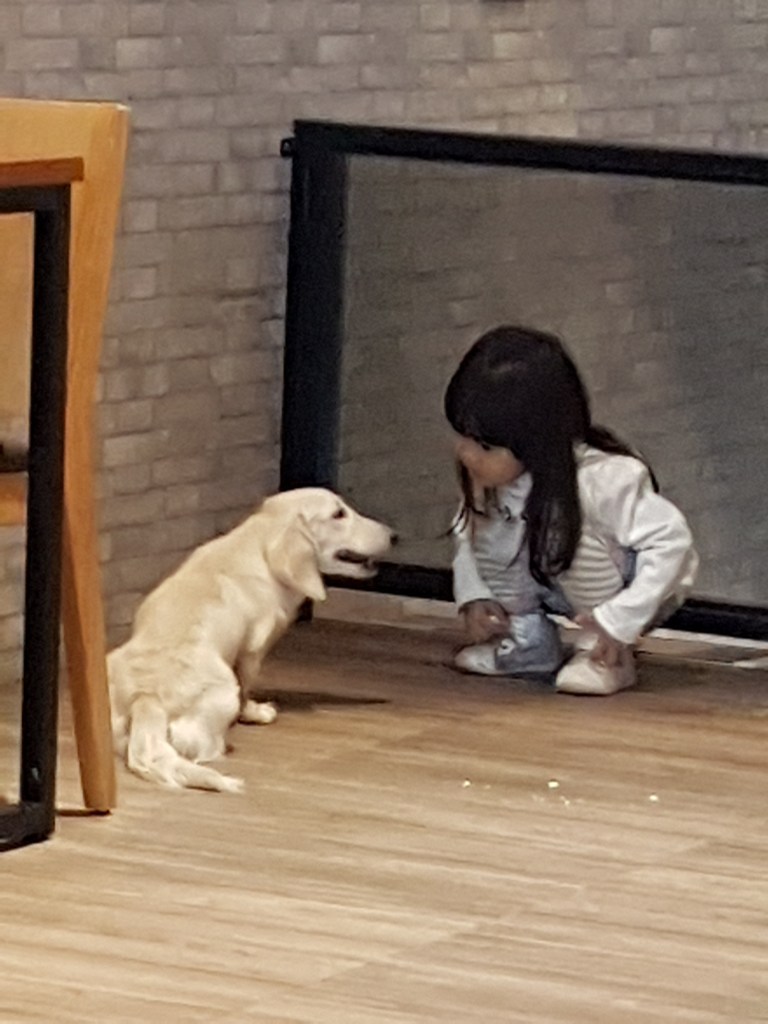
Well the dogs and the girls minding it were cute and friendly. So I found the place to be much agreeable.
I finally managed to check into Good9stay once I returned to the hotel, and took a short nap. I awoke to some light evening rain, which did not stop me from re-introducing myself to the famous Ximending.
The lights, the crowds, the vibe was still great and students, tourists, as well as working locals filled up the area. I took some time exploring the Cinema parks, checked out certain special alleys which contained brilliant street art, and visited the famed One Piece Store as well.
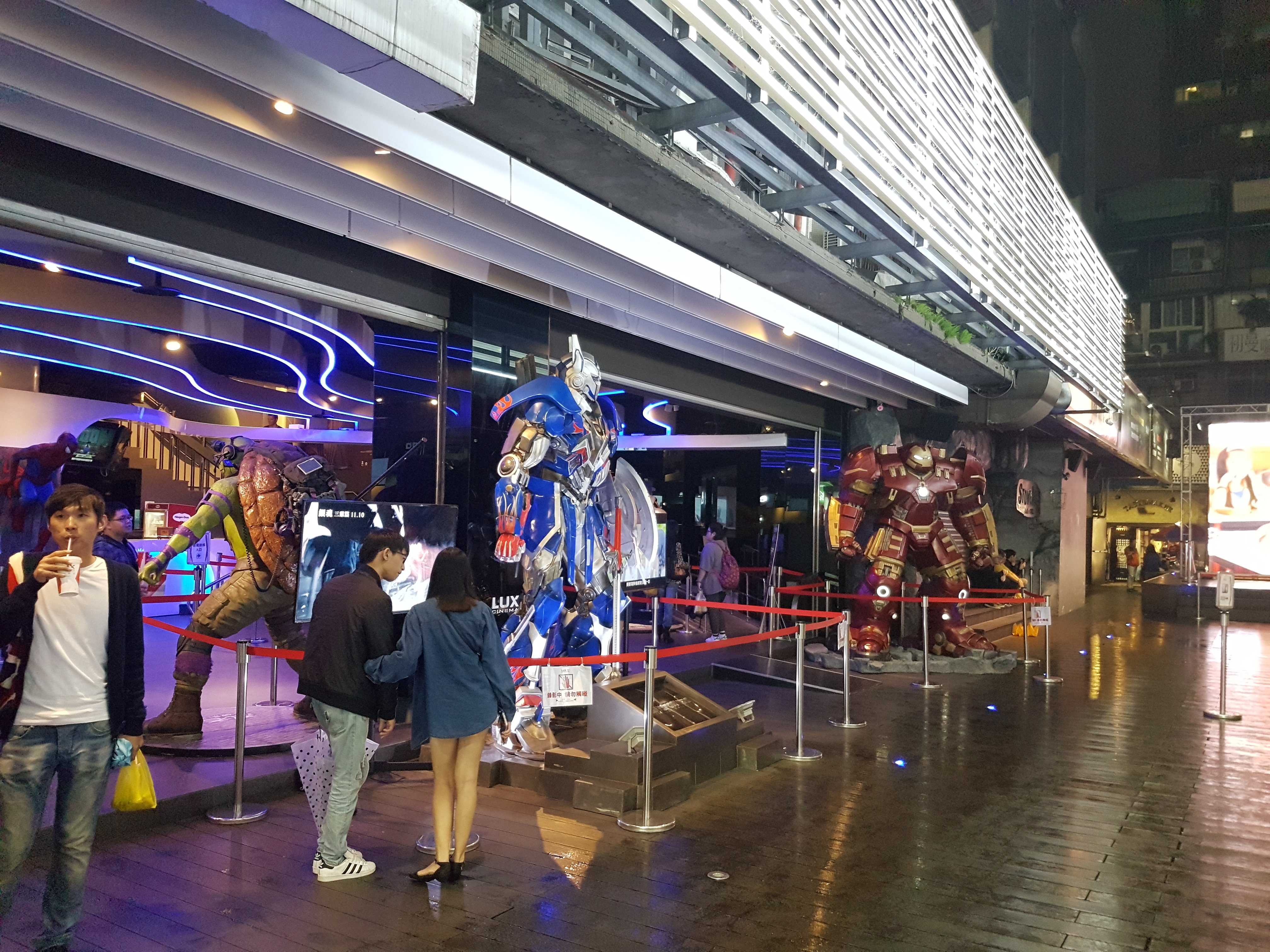
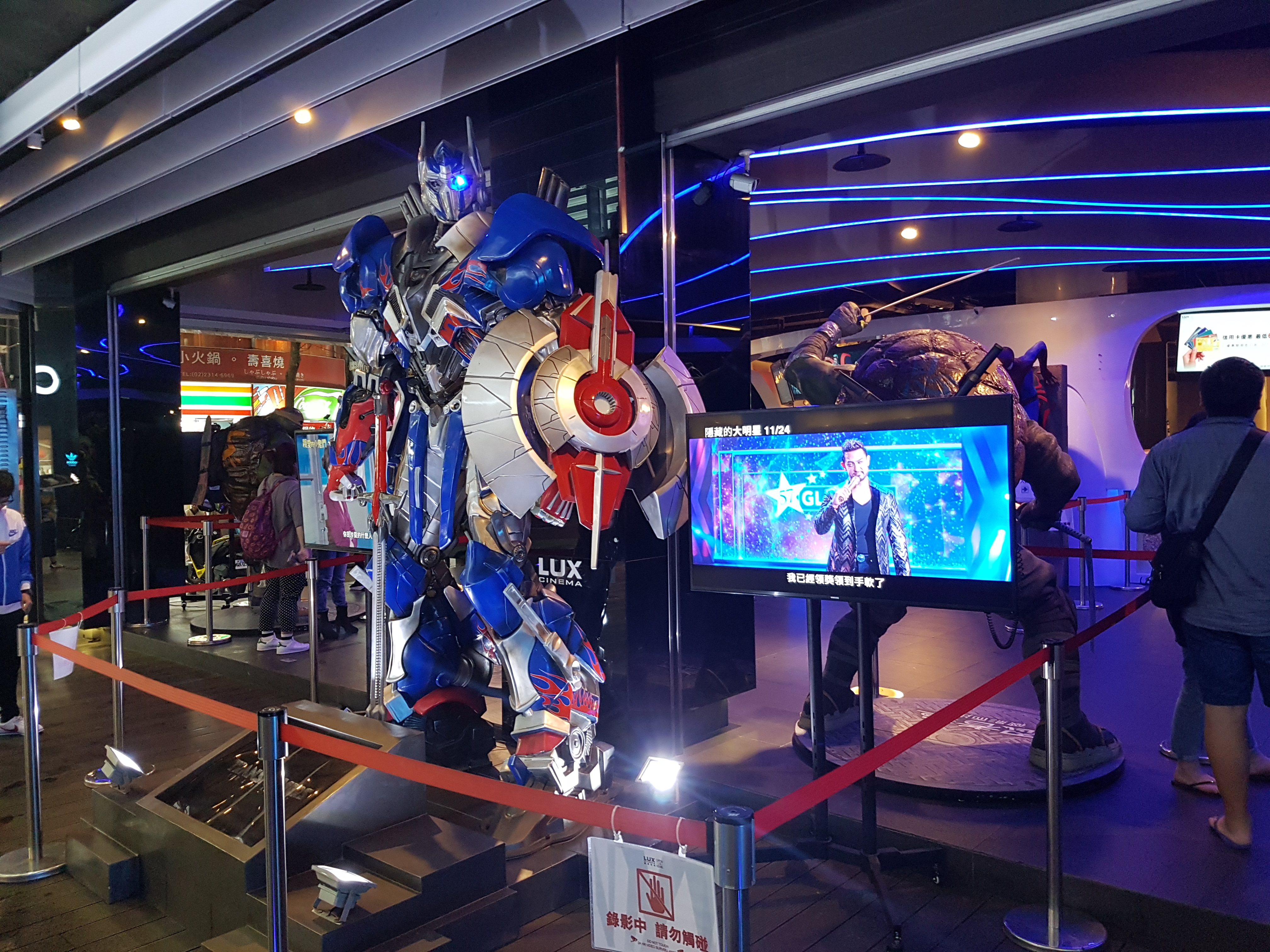
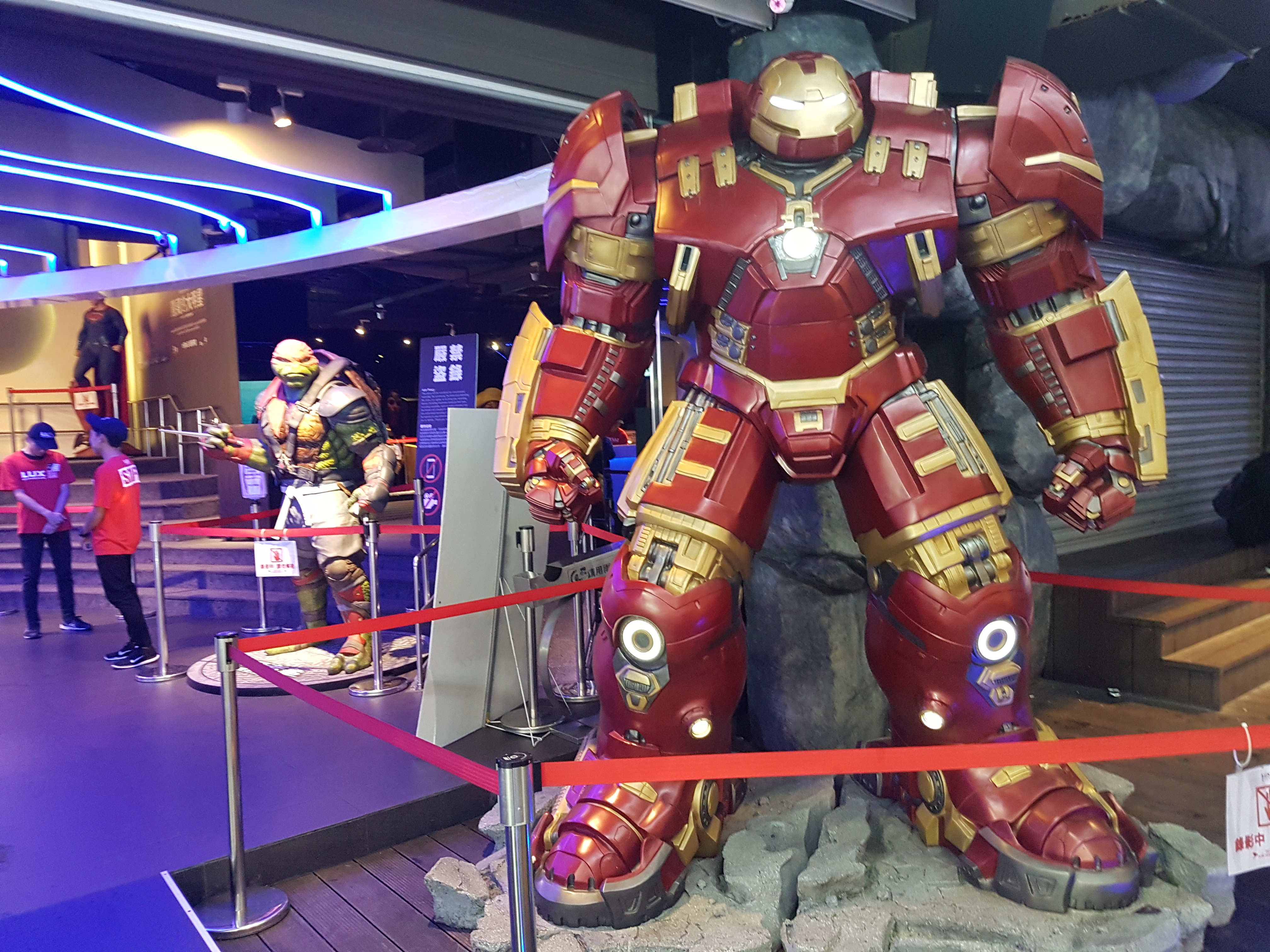
(Above: Xi Men Ding Cinema Park – wow look at those life-sized models)
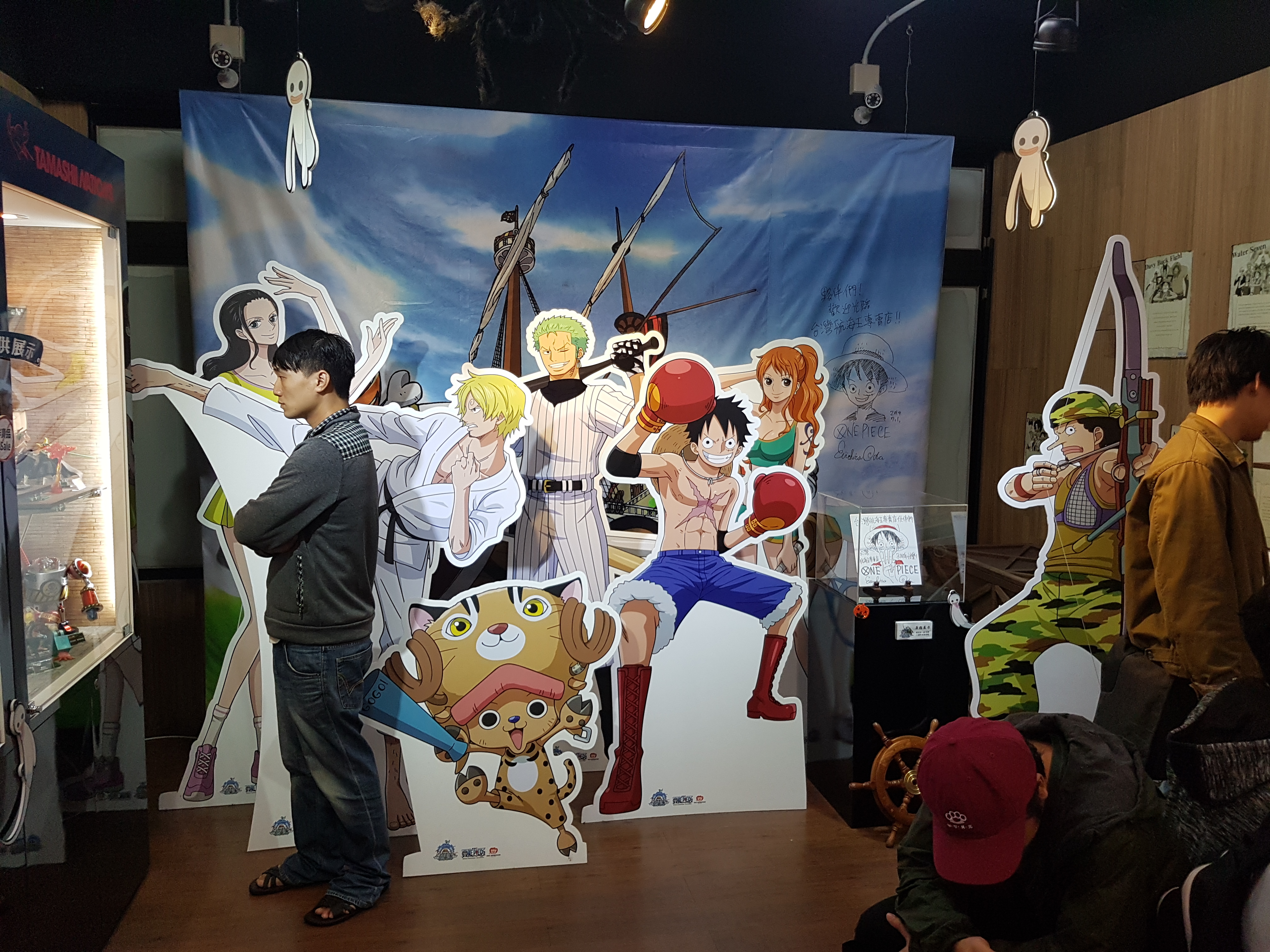
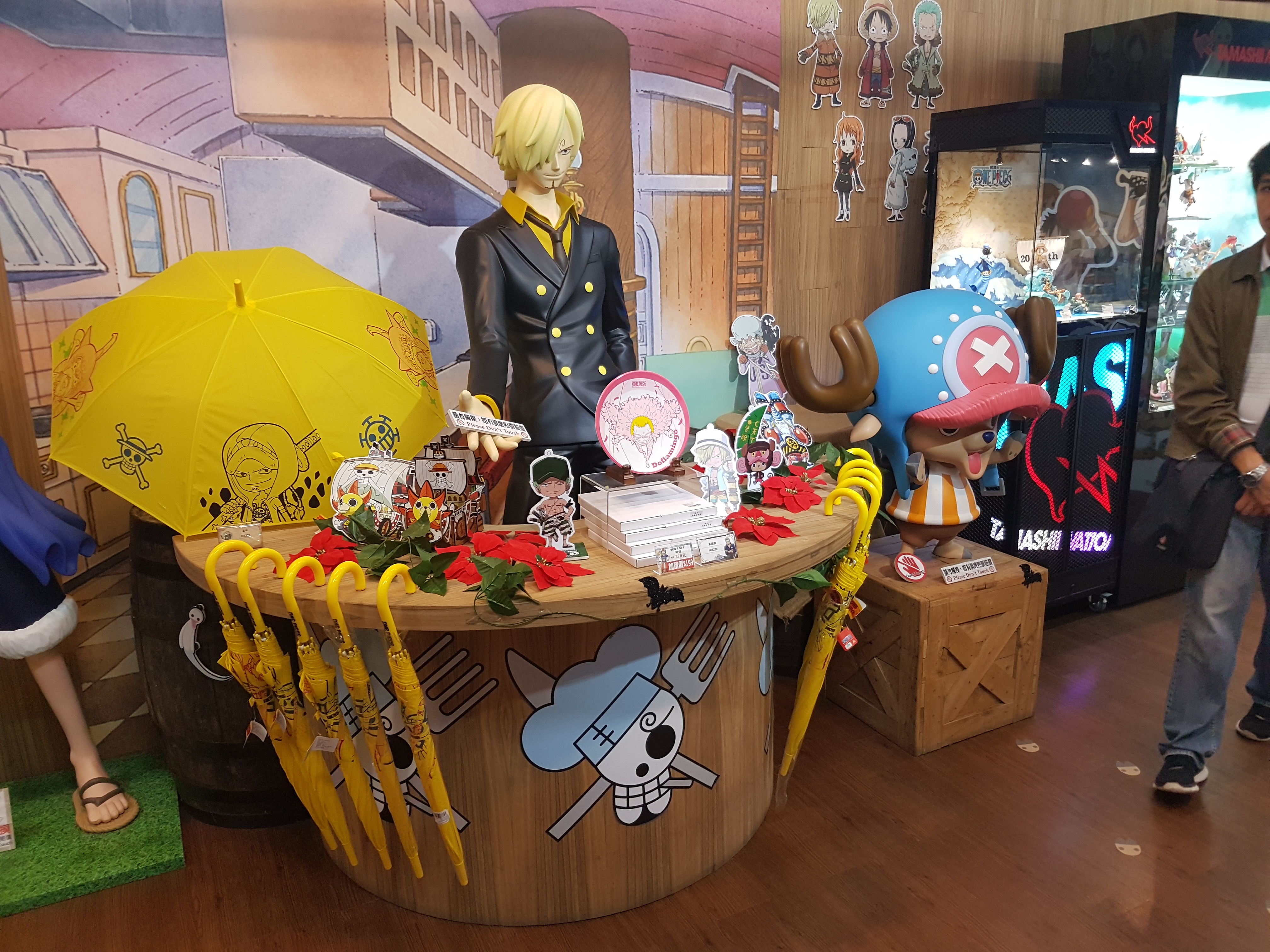
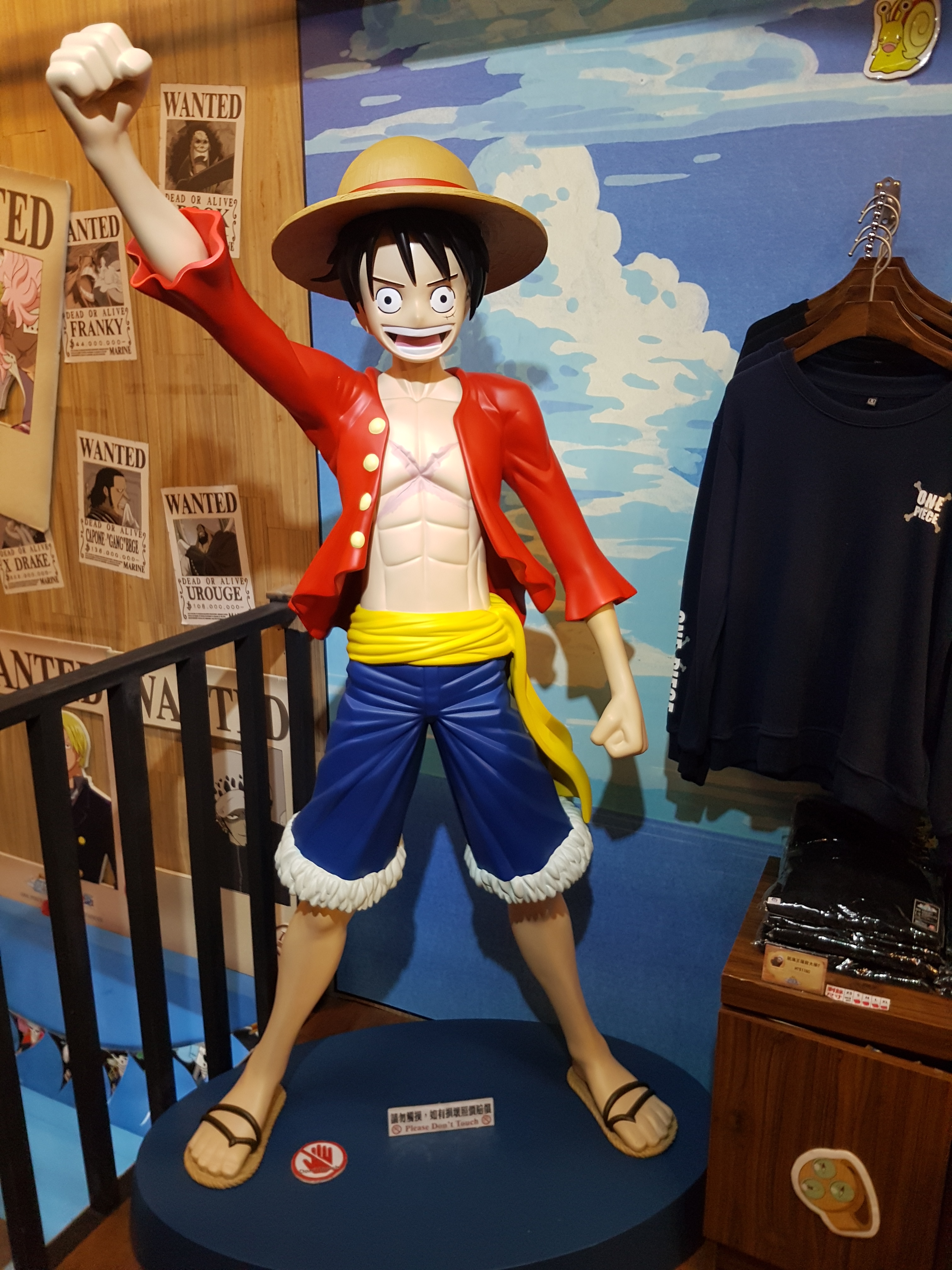
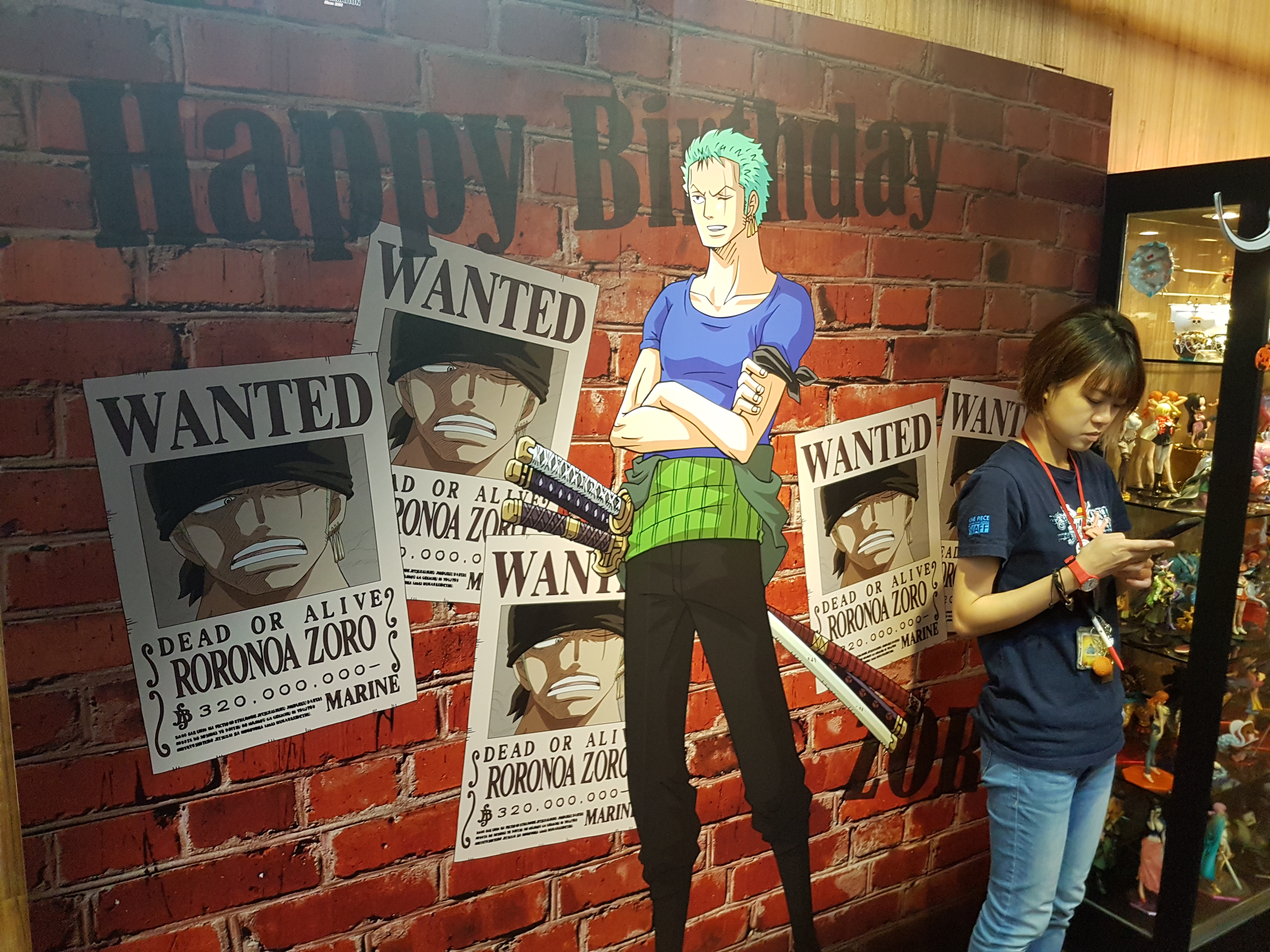
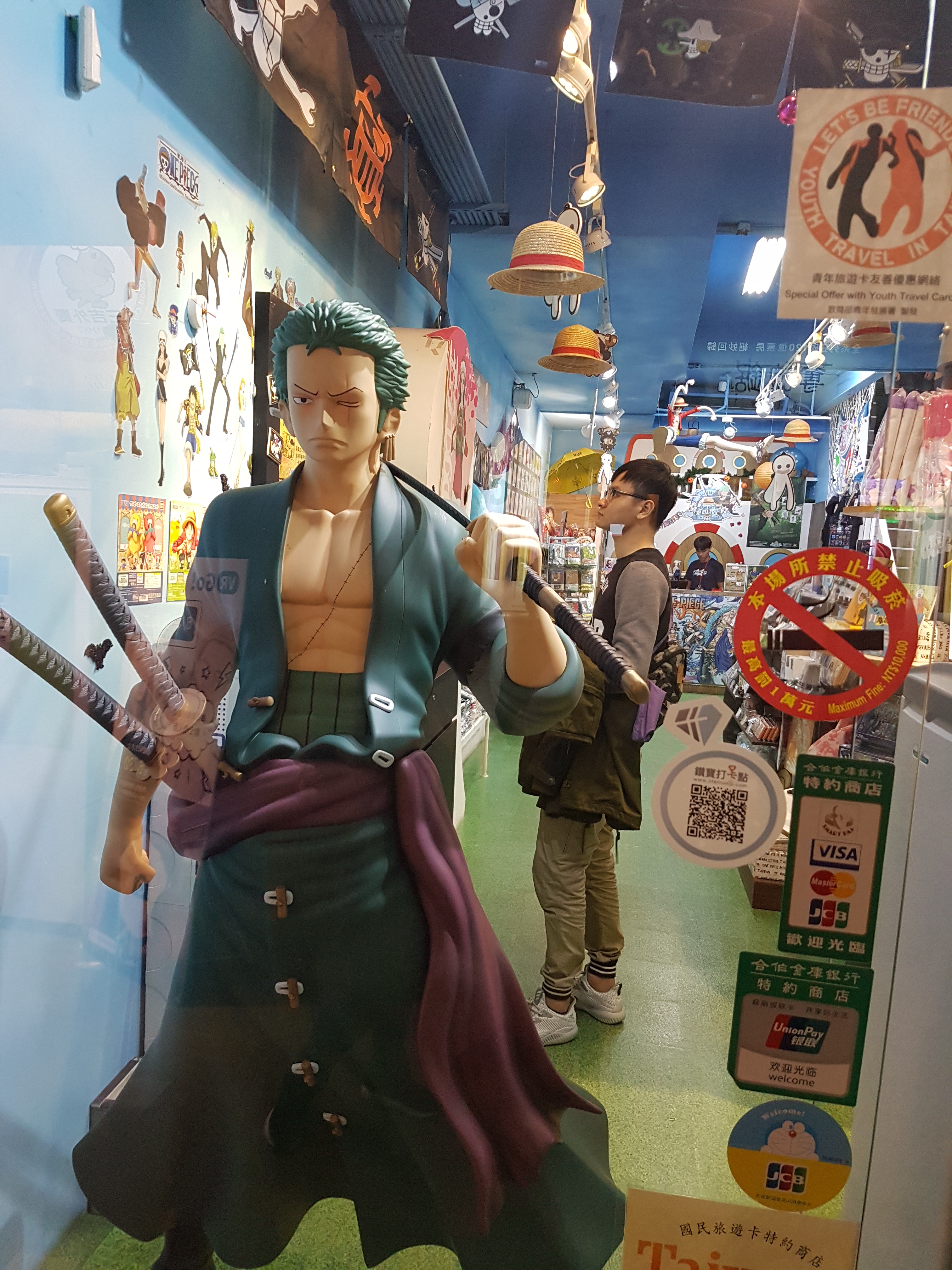
(Above: Xi Men Ding One Piece Flag ship store)
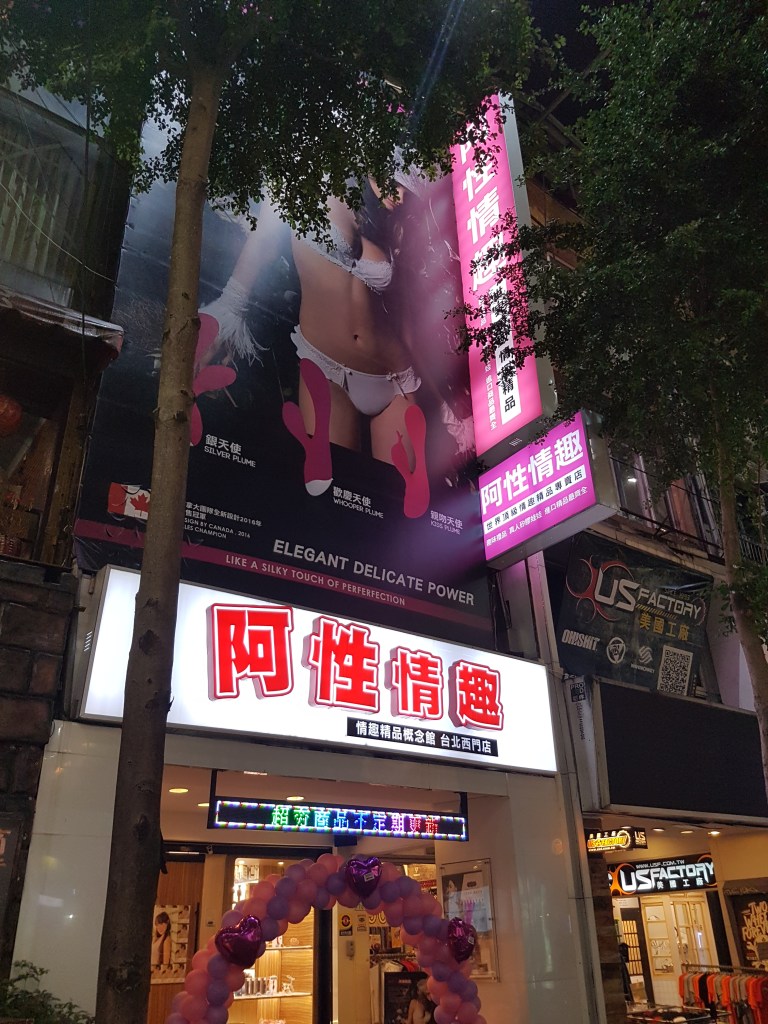
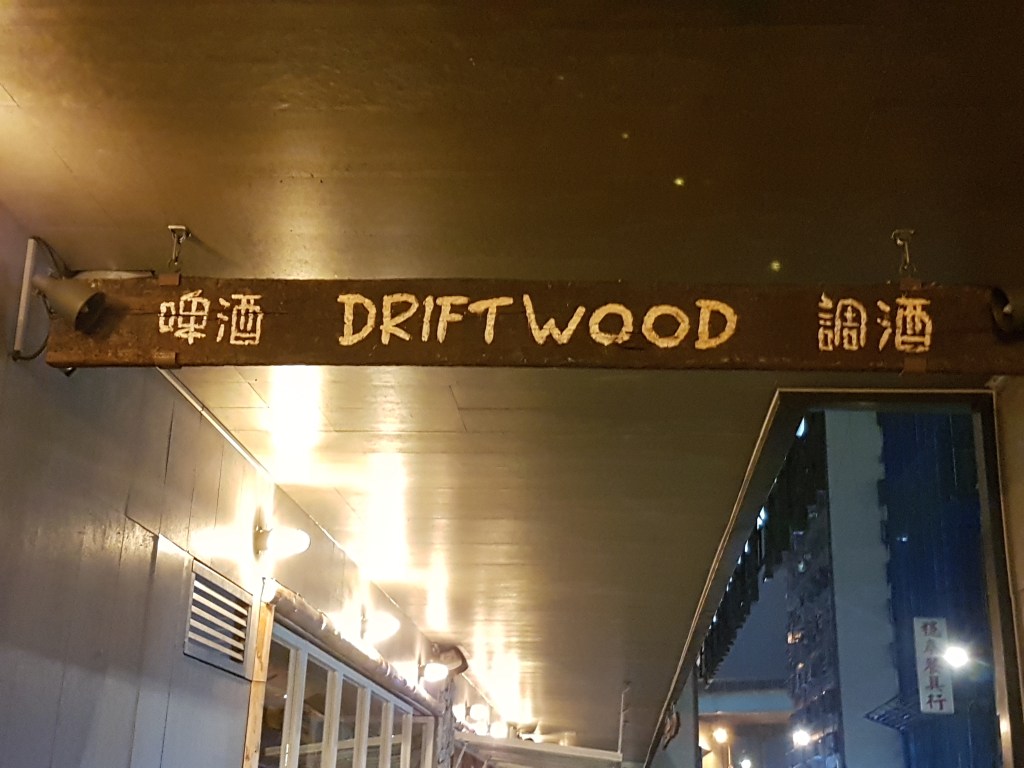
It was a great evening spent roaming XMD and getting very acquainted to most of the small streets and alleys, and my day ended with a visit to my first Craft Beer Pub right at the fringes of XMD.
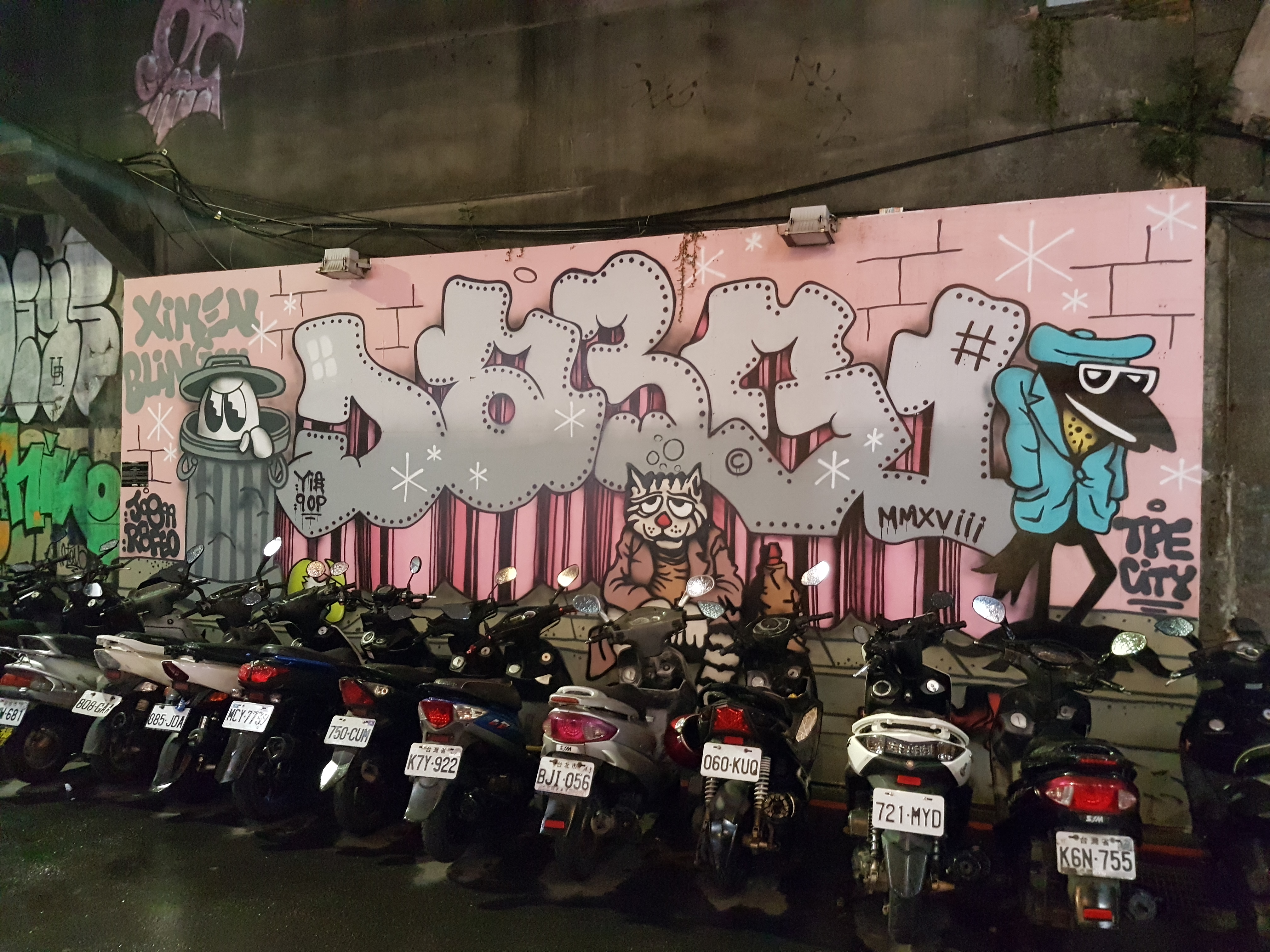
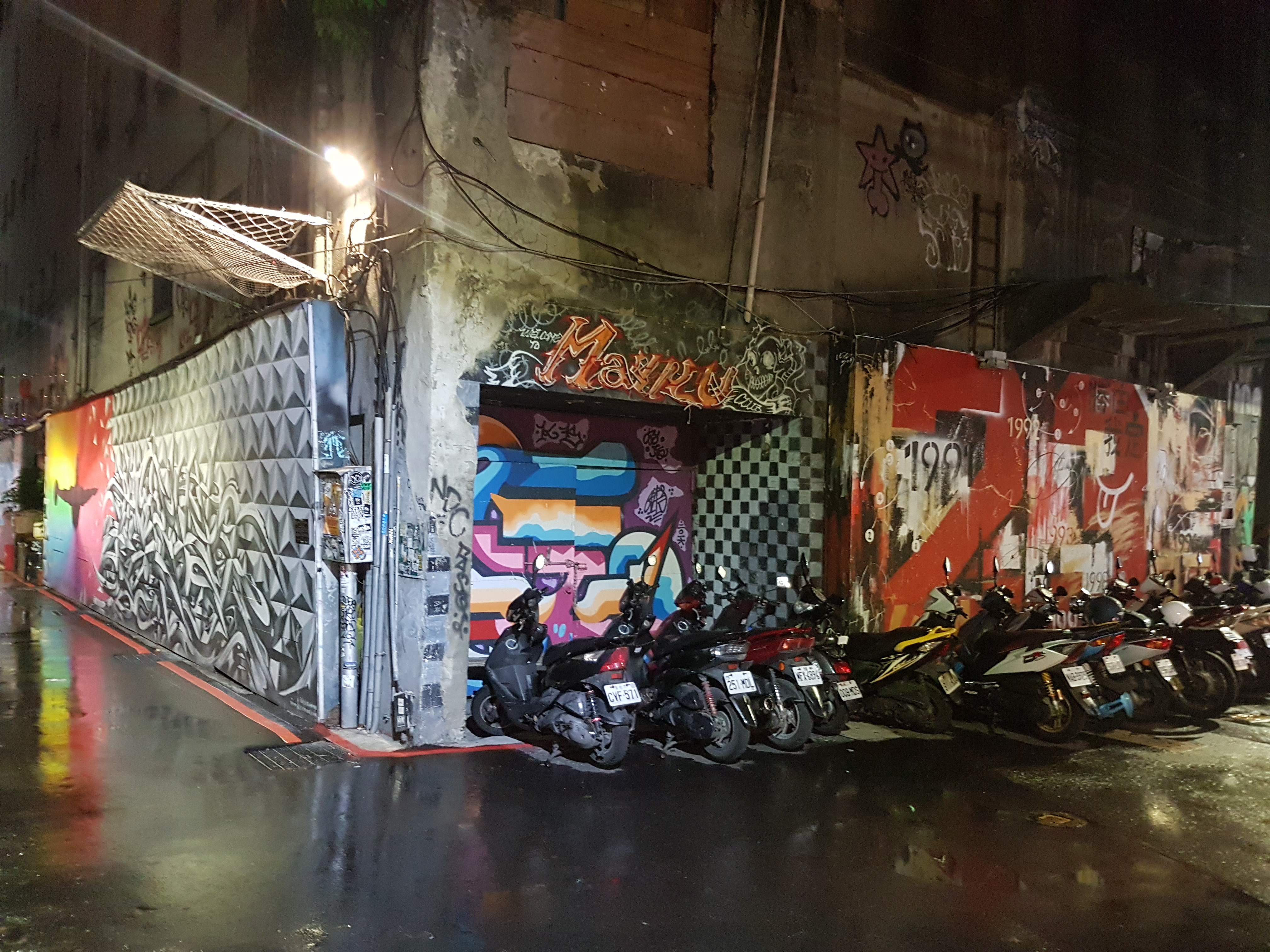
(Above: And when you really explore the back alleys of XMD, you discover the most amazing street art in the weirdest nooks and crannies)
Read up on my visit to Driftwood Ximending here for the lowdown of this craft beer pub.

 Wanderer's Anthology
One thought on “Taipei Solo Trip – Day 1 (11 Nov 2017)”